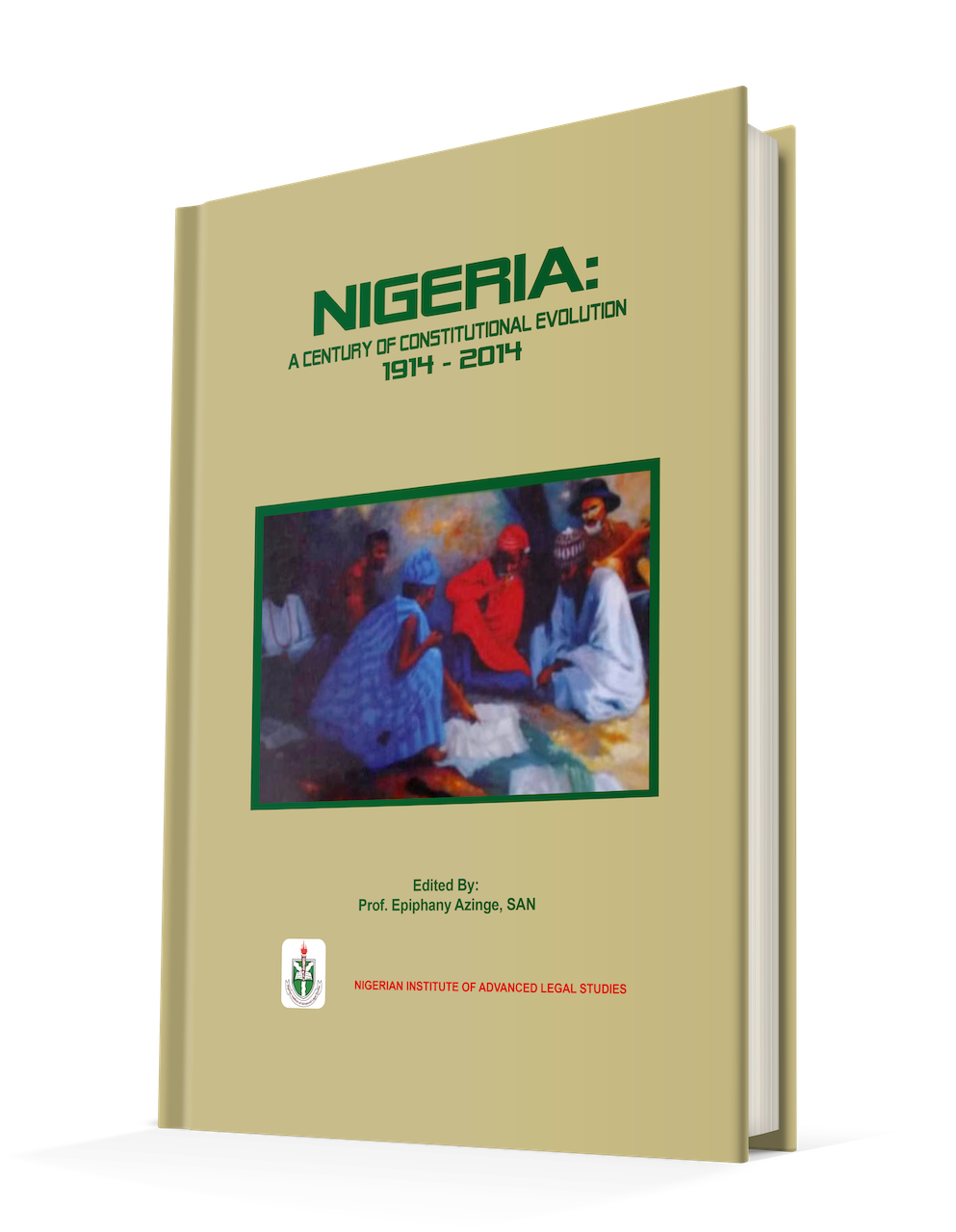

Our aim is to help people learn and showcase our vast wealth of materials which are known to have generated key interest from the foreign researchers.
The book is a book of many facets which explores the history of Nigeria while discussing Constitutional developments. As a historical book, it ignites the memories of our Constitutional history by discussing the legal regime and administration of pre-colonial Nigeria; the attainment of independence; post independence administration, military interventions, development of the regions; state creation; and Constitutional amendments. In displaying the structure of government, the book touches on federalism, presidentialism and unitary governance in Nigeria. It also examines issues such as minority rights in Nigeria, military administration and the civil war which have threatened the peaceful co existence of the country at one time or the other. The impact of Constitutional development on the sharing of revenue resources, electoral bodies and ï¬nancial institutions is also discussed. The future of Nigeria with the current 1999 Constitution is essentially detailed with academic opinions on ways in which the Constitution can adequately be what it is meant to be, so also, the importance of political will on the part of the people.
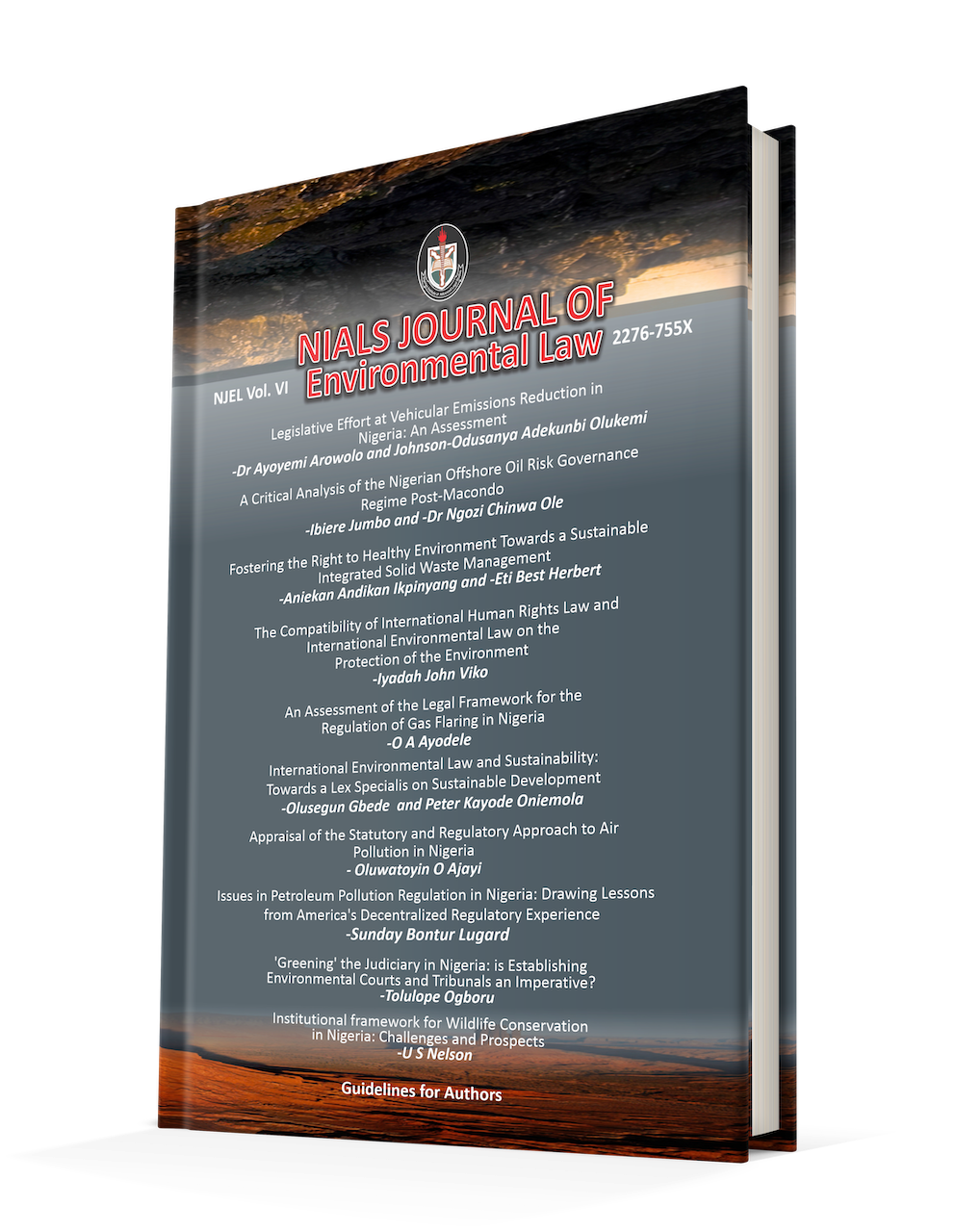
The NIALS Journal of Environmental Law (NJEL) is a peer reviewed Journal published by the Nigerian Institute of Advanced Legal Studies. The NJEL aims to publish works of the highest quality that will serve not only to advance the subject of Environme...
The integrity and virility of the Bench is undisputedly connected to the associated agencies of the judiciary and affects the society at large.The Nigerian Institute of Advanced Legal Studies (NIALS) shares the view of active engagement in the reform...
This book brings together and addresses a wide range of matters that have never previously been considered together in book form. These include Money Laundering and Child Trafï¬cking as Common Bedfellows, an Overview of Cooperation Efforts in Chi...
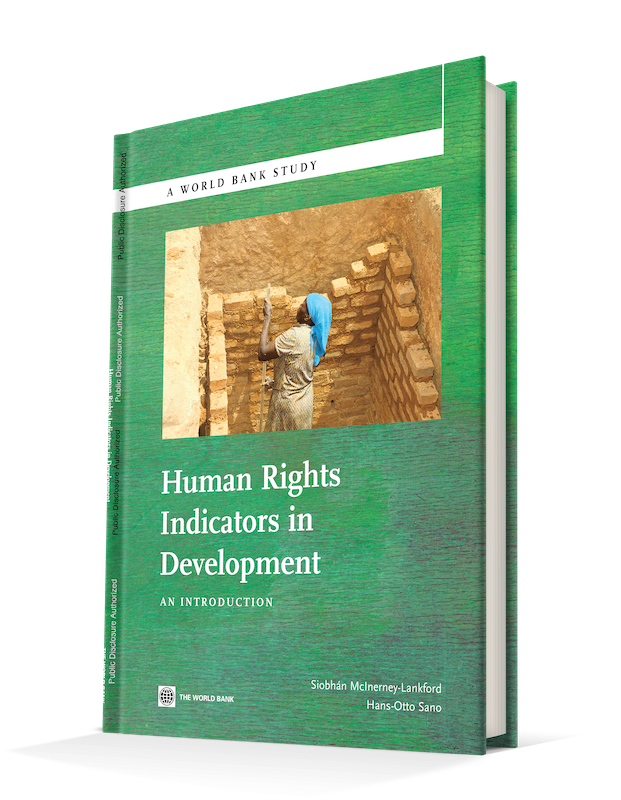
Human rights indicators are central to the application of human rights standards in context and relate essentially to measuring human rights realization, both qualitatively and quantitatively. They offer an empirical or evidence-based dimension to th...
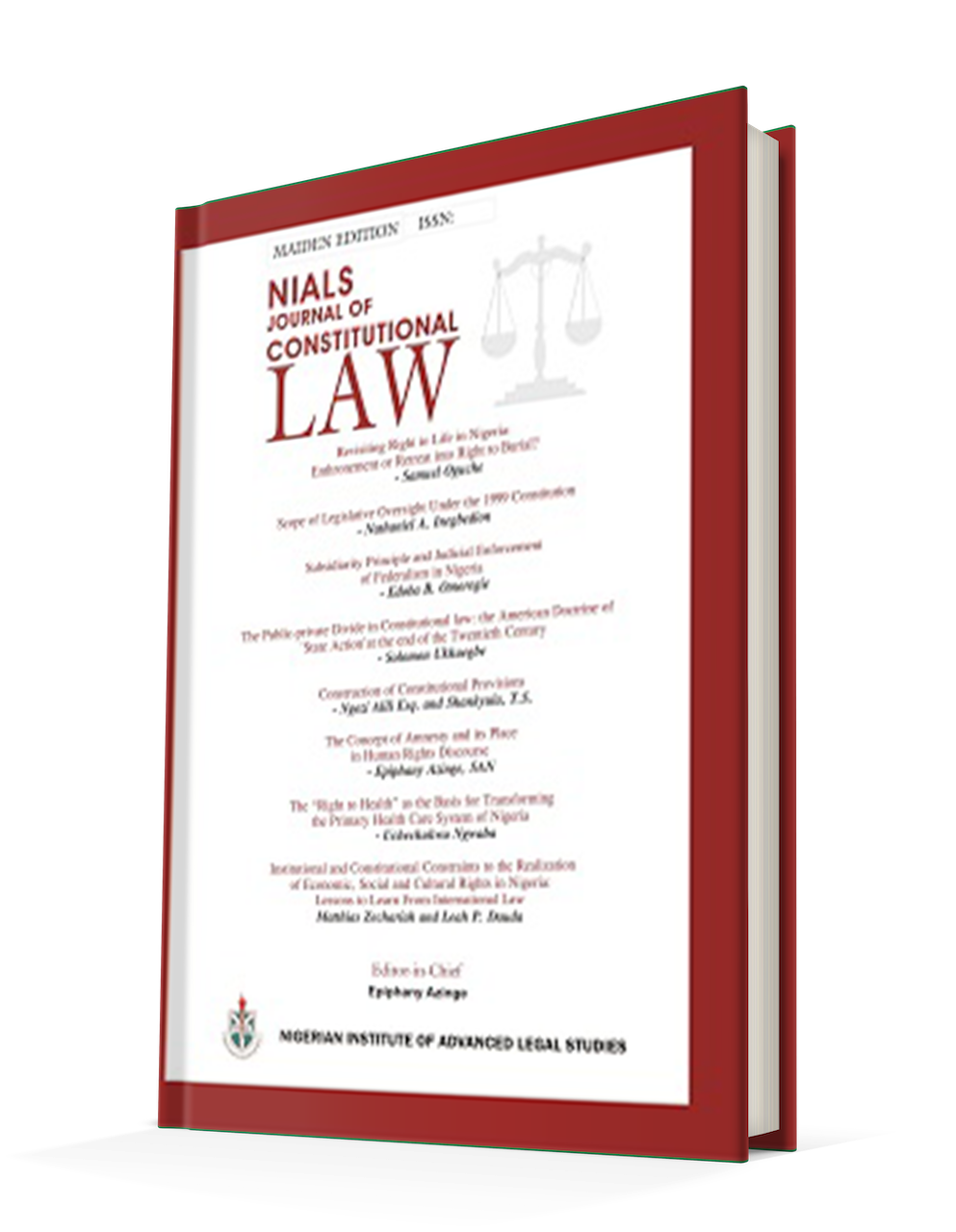
Constitutional Law in any State defines State powers as well as constitutes and delineates the organs of government. In addition to dealing with the organization of state and government, constitutional law also concerns itself with the relationship b...
Copyright © 2026 Lawscope Library. All Rights Reserved